
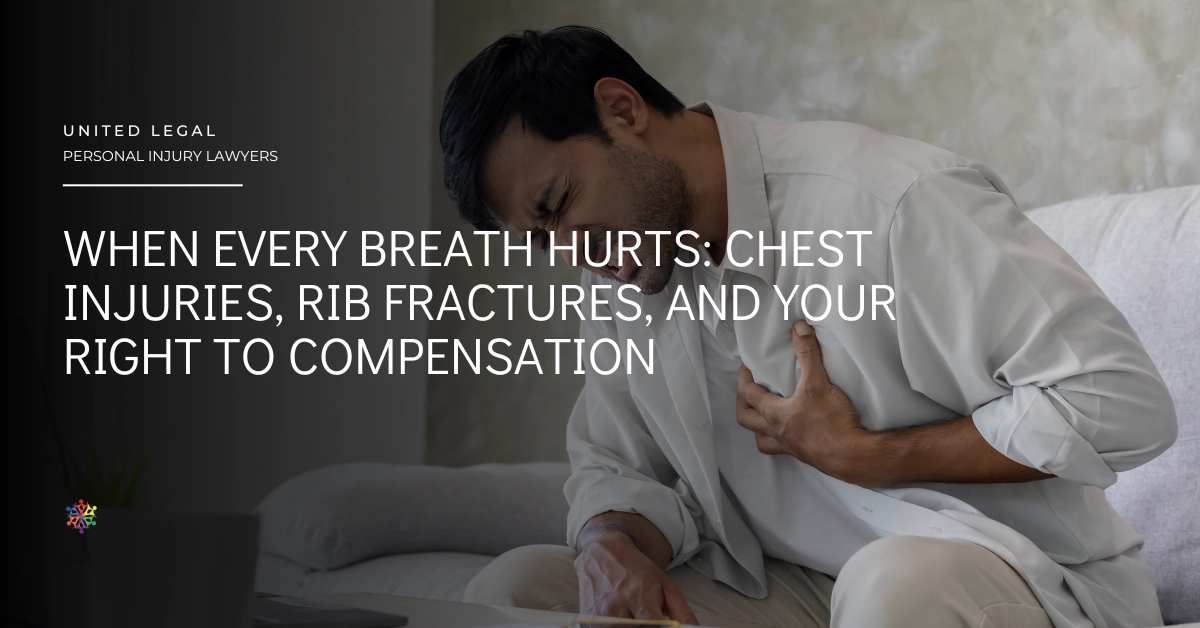
Chest injuries can be both painful and dangerous. Even a simple movement — like breathing, coughing, or turning — can become difficult when ribs are fractured or internal damage occurs. While some injuries may appear minor at first, they can quickly develop into serious medical conditions requiring urgent care.
When chest injuries result from someone else’s negligence, you may have the right to seek compensation. Understanding your legal rights early can help you manage recovery while protecting your financial future.
Understanding Chest Injuries and Rib Fractures
Chest injuries often involve damage to the ribs, lungs, or surrounding tissues. Rib fractures are among the most common outcomes, especially in high-impact accidents.
These injuries may include:
- Broken or cracked ribs
- Bruised ribs or chest wall trauma
- Collapsed lung (pneumothorax)
- Internal bleeding
- Damage to organs such as the lungs or heart
Although some rib fractures heal over time, others lead to complications that require hospitalisation or ongoing care.
Common Causes of Chest Injuries
Chest injuries frequently occur in:
- Motor vehicle accidents
- Workplace incidents involving heavy machinery
- Falls from heights
- Sports or recreational accidents
- Crush injuries or impact trauma
For example, high-impact collisions can cause multiple rib fractures and internal organ damage. If your injury involves deeper complications, you may also benefit from reading our article on When the Damage Isn’t Visible: Internal Organ Injuries and Legal Rights After an Accident, which explains how hidden injuries affect compensation claims.
Why Chest Injuries Can Be More Serious Than They Appear
At first, chest injuries may seem manageable. However, complications can develop over time. Broken ribs can puncture the lungs, while internal bleeding may not show immediate symptoms.
In many cases, individuals experience:
- Severe pain when breathing
- Reduced lung function
- Increased risk of infection
- Difficulty performing daily activities
- Extended recovery periods
As a result, these injuries can disrupt both your health and your ability to work.
Your Legal Rights After a Chest Injury
If negligence caused your injury, you may be entitled to compensation under the Civil Law (Wrongs) Act 2002 (ACT). This law allows injured individuals to recover damages when another party fails to take reasonable care.
To establish a claim, you must show:
- A duty of care existed
- That duty was breached
- The breach caused your injury
- You suffered measurable loss
Because chest injuries often involve both visible and internal damage, medical evidence plays a critical role in proving your case.
What Compensation Can Cover
A chest injury compensation claim may include:
- Emergency medical treatment and hospital stays
- Diagnostic imaging (X-rays, CT scans)
- Specialist consultations
- Pain management and medication
- Physiotherapy and rehabilitation
- Loss of income and reduced earning capacity
- Pain, suffering, and lifestyle impact
Therefore, compensation aims to support your full recovery — not just the initial treatment phase.
If your injury leads to surgical intervention, you may also find it useful to read When Surgery Becomes Part of Recovery: Knowing Your Compensation Rights, which explains how surgery can influence the value of a claim.
The Importance of Medical Evidence
Chest injuries often require detailed documentation. Consequently, gathering medical evidence early strengthens your claim.
Important evidence may include:
- X-rays and CT scan results
- Hospital and treatment records
- Specialist reports
- Evidence of ongoing symptoms
- Expert opinions on long-term impact
Because insurers may underestimate rib fractures as “minor injuries,” strong documentation ensures your claim reflects the true extent of your condition.
Recovery Can Take Longer Than Expected
Although some rib fractures heal within weeks, recovery is not always straightforward. In fact, complications such as chronic pain or reduced lung capacity can persist for months.
This means:
- You may need extended time off work
- Daily activities may remain limited
- Ongoing therapy or treatment may be required
Accordingly, compensation must consider both short-term recovery and long-term effects.
Act Early to Protect Your Rights
Time limits apply to personal injury claims in the ACT. Seeking legal advice early helps ensure your claim stays within deadlines and that evidence is properly preserved.
Even if your symptoms seem manageable at first, chest injuries can worsen. Acting early allows you to protect your legal rights while focusing on recovery.
Final Thoughts
When every breath hurts, it’s a clear sign that your body needs time and care to heal. Nevertheless, you should not bear the financial burden alone if someone else’s negligence caused your injury.
Understanding your right to compensation ensures you can access the treatment, support, and financial security needed to move forward.
Need Advice About a Chest Injury Claim?
At United Legal, we assist clients across the ACT with serious injury claims, including cases involving chest trauma and rib fractures. We understand how these injuries can affect your daily life, and we work to ensure your claim reflects the full extent of your loss.
Call (02) 6295 2283 or email admin@unitedlegal.com.au for your free consultation today. It only takes a few minutes to get started — and it could make a meaningful difference in your recovery and future security.