
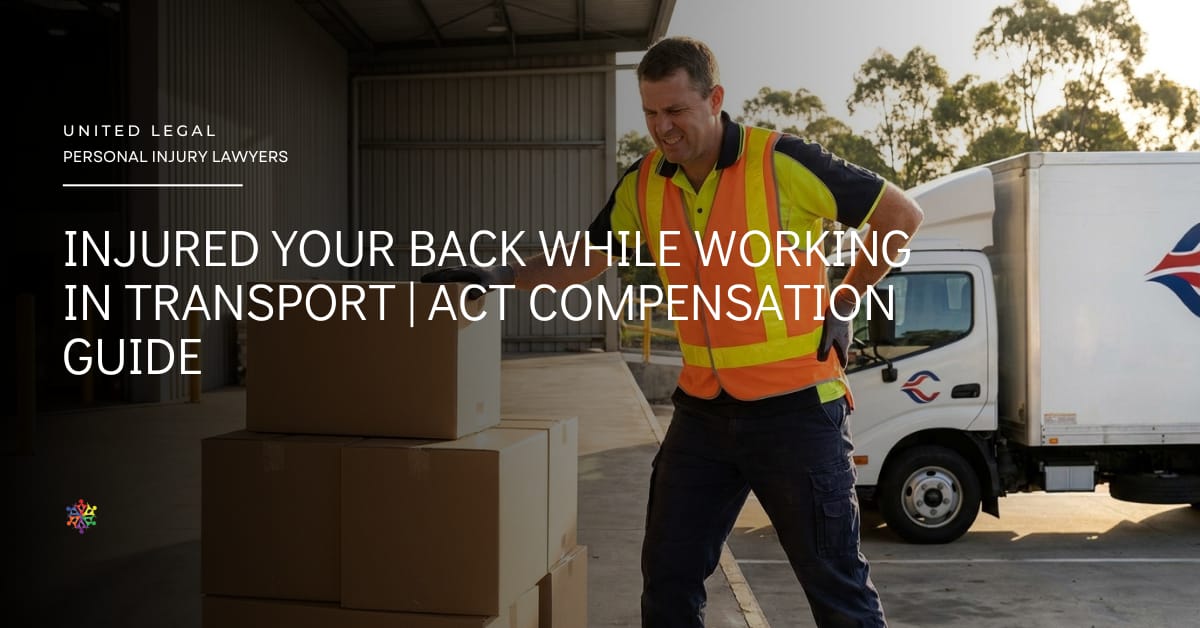
If you’ve suffered a Back injury in transportation job, you’re probably dealing with more than just pain. You might be wondering how you’ll pay the bills, when you’ll get back behind the wheel, or whether your employer’s insurance will actually help.
The good news is that a Workers Compensation claim in ACT may help cover your medical costs, lost income, and other expenses while you recover. Knowing what to do early can make the whole process much less stressful.
Whether you drive trucks, delivery vans, buses, forklifts, or work in freight and logistics, this guide explains what you need to know.
Common Causes of Back Injury in Transportation Jobs
Transport work is physically demanding. Long shifts, heavy lifting, awkward movements, and hours spent sitting behind the wheel all place extra pressure on your spine.
However, many injuries don’t happen because of one major accident. They build up over weeks, months, or even years.
Additionally, some of the most common causes include:
- Heavy lifting during loading and unloading
- Moving freight without proper lifting equipment
- Slips and falls while entering or leaving vehicles
- Vehicle collisions
- Repeated twisting while securing loads
- Driving long distances with poor posture
- Constant vibration from heavy vehicles
- Sudden braking or impact injuries
Therefore, even what feels like a “small strain” can turn into a long-term back problem if left untreated.
Back Injury In Transportation Job Risk
People often think truck driving is just sitting behind the wheel.
In reality, the situation is very different.
Many truck drivers spend their day:
- Loading freight
- Unloading pallets
- Climbing trailers
- Securing cargo
- Operating tail lifts
- Performing vehicle checks
Consequently, these tasks place constant pressure on the lower back.
That’s why ACT workers comp for truck drivers exists—to support workers injured while doing their job.
Try our Free Workers Compensation Claim Check Below
Don’t Ignore Early Warning Signs
Many transport workers try to push through the pain.
Unfortunately, this often makes the injury worse.
Watch for signs such as:
- Persistent lower back pain
- Muscle stiffness
- Pain shooting into the legs
- Numbness or tingling
- Difficulty standing after driving
- Reduced movement
- Pain when lifting even light objects
Getting medical treatment early also creates important evidence if you later make a transport worker back injury claim.
To learn more, read our comprehensive guide on how to navigate ACT injury claims
How to File a Back Injury Claim in the ACT
Making a Workers Compensation claim in ACT doesn’t have to be confusing.
So, following the right steps from the beginning gives your claim a stronger foundation.
Get Medical Treatment For Your Back Injury In Transportation Job
Your health comes first.
So, visit a doctor as soon as possible.
Tell them:
- How the injury happened
- What work you were performing
- Where the pain is located
- Whether you’ve experienced similar pain before
Your medical certificate is one of the most important documents in your claim.
Tell Your Employer About The Back Injury
Report the injury as soon as you can.
To begin, we provide clear details about:
- The date
- The location
- What happened
- Any witnesses
Waiting too long can create unnecessary questions later.
Complete Your Back Injury In Transportation Job Claim Forms
Generally, your employer’s workers compensation insurer will usually provide the required paperwork.
Therefore, take your time completing every section.
Double-check:
- Dates
- Injury description
- Employment details
- Medical information
Accurate paperwork helps avoid delays.
Keep Copies of Everything
Specifically, create a folder for documents such as:
- Medical certificates
- Scan reports
- X-rays
- Physiotherapy invoices
- Pharmacy receipts
- Emails
- Claim forms
- Wage records
Undoubtedly, good records can make the claims process much smoother.
Follow Your Treatment Plan
Attend every appointment.
For instance, this may include:
- Physiotherapy
- Specialist consultations
- Rehabilitation
- Exercise programs
- Medical reviews
Consequently, missing appointments may affect your recovery and your claim.
Back Injury in Transportation Job: Compensation
After a Back injury in transportation job, many workers worry about how they’ll manage. Fortunately, a successful Workers Compensation claim in ACT can provide support while you focus on getting better.
In general, depending on your circumstances, compensation may cover a range of expenses.
Medical Treatment
Recovery often involves more than one visit to the doctor.
Specifically, your claim may help pay for:
- GP appointments
- Specialist consultations
- Physiotherapy
- Chiropractic treatment (where approved)
- Diagnostic imaging such as X-rays, CT scans, or MRI scans
- Prescription medication
- Pain management programs
- Rehabilitation services
Following your treatment plan gives you the best chance of returning to work safely.
Weekly Income Payments
A back injury can make it impossible to drive or complete manual handling duties.
Consequently, if your injury prevents you from working, or you can only return on reduced hours, you may be entitled to weekly compensation payments.
Essentially, these payments are designed to help replace part of your lost income while you recover.
However, every claim is different, so the amount payable depends on your individual situation.
Rehabilitation and Return-to-Work Support
However, getting back to work doesn’t always mean returning to your previous duties straight away.
In addition, many injured transport workers benefit from rehabilitation programs that may include:
- Graduated return-to-work plans
- Workplace assessments
- Modified duties
- Ergonomic advice
- Occupational therapy
- Vocational rehabilitation where returning to driving isn’t immediately possible
The goal is to help you return to suitable work without putting your recovery at risk.
Permanent Impairment Compensation
Some back injuries heal well.
However, others leave lasting problems.
Furthermore, if your injury results in permanent impairment, you may be entitled to additional compensation beyond weekly benefits and medical expenses.
Specifically, this can include a Canberra workers compensation payout, depending on the medical evidence and the level of permanent impairment assessed under ACT legislation.
Generally, a medical specialist will usually assess your condition once it has stabilised.
Can Truck Drivers Claim Workers Compensation?
Yes.
In reality, many transport workers wrongly believe they can’t claim because they:
- Already had minor back pain
- Were partly responsible for the incident
- Didn’t report the injury immediately
- Lifted something “the wrong way”
These situations do not automatically prevent a claim.
If your work significantly contributed to your injury, you may still have grounds to make a transport worker back injury claim.
Ultimately, every case depends on its own facts, which is why getting legal advice early can make a real difference.
How to Claim Workers Comp for Back Injury
If you’re wondering how to claim workers comp for back injury, keeping things simple often works best.
For example, here’s a quick checklist:
- Seek medical treatment immediately.
- Tell your employer about the injury as soon as possible.
- Obtain a medical certificate from your doctor.
- Complete your workers compensation paperwork carefully.
- Keep copies of every document and receipt.
- Attend all medical and rehabilitation appointments.
- Speak with an experienced workers compensation lawyer if your claim is delayed, disputed, or rejected.
Acting early gives you the best opportunity to protect your rights.
Learn more about your options in our comprehensive guide to permanent impairment claims in ACT.`
Frequently Asked Questions About Transportation Job Back Injury
Can I claim if my back injury developed over time?
Yes.
Not every workplace injury happens because of a single accident. Repetitive lifting, constant vibration from heavy vehicles, and years of manual handling can all contribute to a compensable injury.
What if my employer says the injury isn’t work-related?
Your employer doesn’t make the final decision.
Medical evidence, workplace records, and other information will all be considered during the claims process.
Can I choose my own doctor?
In most cases, yes.
Seeing your regular GP can help because they already understand your medical history and can monitor your recovery over time.
Should I speak with a lawyer?
Many claims are straightforward.
However, legal advice can be helpful if:
- Your claim has been rejected.
- Payments have stopped unexpectedly.
- Your injury has become permanent.
- You’re unsure about your legal rights.
- You’re considering a lump sum claim.
Getting advice early may save time and reduce stress later.
Get Help with Your Transportation Job Back Injury Claim Today
A Back injury in transportation job can affect every part of your life, from your health to your income and your family’s financial security. You don’t have to deal with the claims process on your own.
Therefore, if you’ve been injured at work and need guidance about making a Workers Compensation claim in ACT, our experienced team is here to help. We’ll explain your options, answer your questions in plain English, and work to secure the compensation you’re entitled to.
Contact us today for a free, no-obligation claim review and take the first step towards getting your recovery—and your future—back on track.
Contact United Legal